
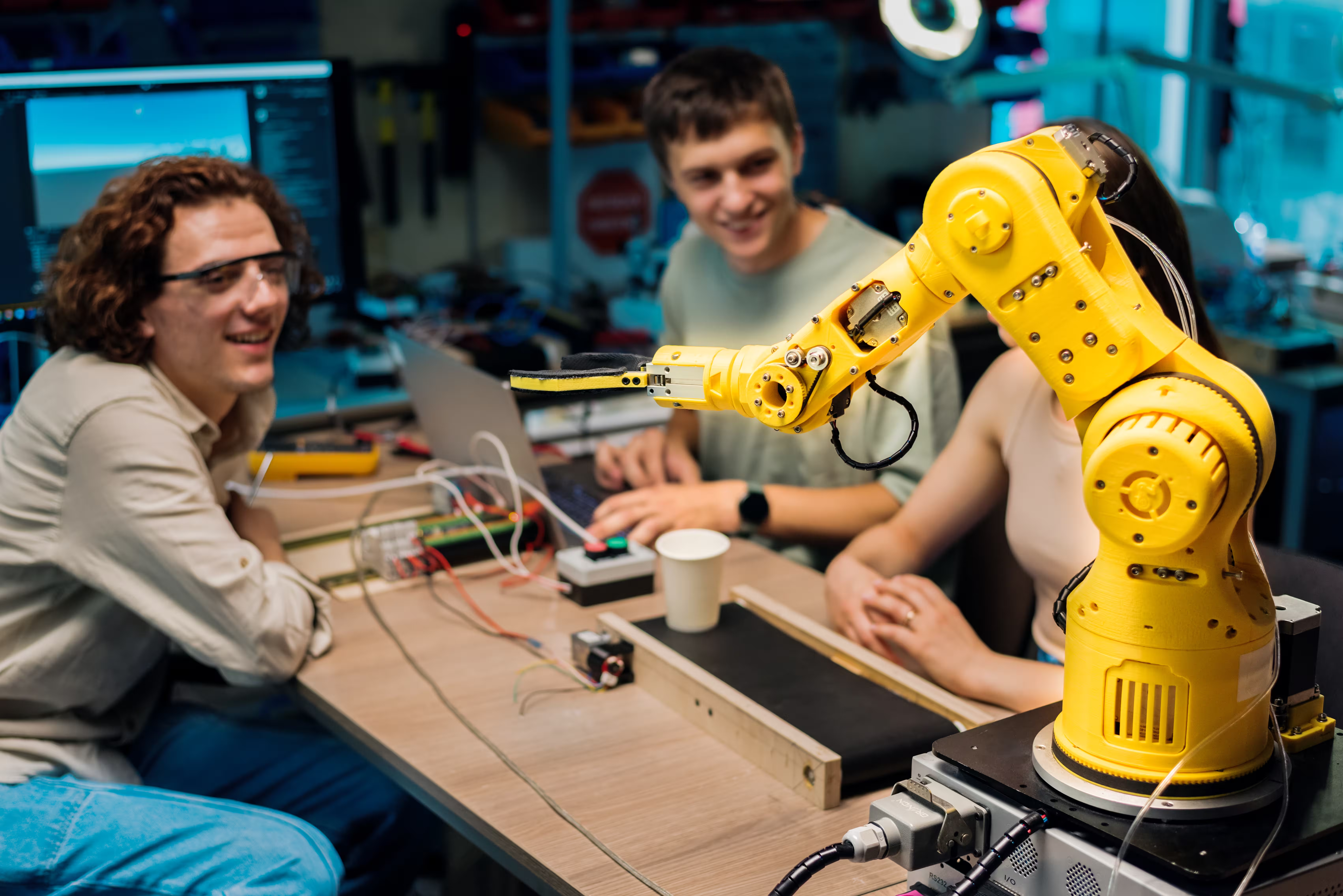
From Automation to Autonomy: The Robotics Engineering Talent Playbook for 2026
Robotics has entered a new phase where intelligence matters as much as mechanics. Physical AI, collaborative robots, digital twins and edge computing are redefining manufacturing, logistics and industrial automation. For engineering leaders, the biggest competitive advantage is no longer buying better robots—it is hiring multidisciplinary teams capable of building autonomous systems.
Why Robotics Is Entering the Physical AI Era
Traditional automation executed predefined instructions. Modern robotics perceives environments through cameras, lidar and force sensors before making real-time decisions using embedded AI. This shift merges robotics, machine vision, controls and software engineering into one capability stack.
Five Technologies Transforming Robotics
1. Physical AI
Real-time perception, reasoning and adaptive motion planning enable robots to operate safely in dynamic environments.
2. Digital Twins
Virtual commissioning allows manufacturers to simulate robotic cells before hardware deployment, reducing project risk and improving ROI.
3. Collaborative Robots
Cobots expand automation beyond high-volume factories by allowing safe human-robot collaboration with lower infrastructure costs.
4. Humanoid Robotics
Humanoid platforms are beginning to address repetitive industrial workflows where existing facilities were designed around human movement.
5. Edge AI
Low-latency inference enables robots to make decisions locally without depending entirely on cloud connectivity.
Engineering Talent Requirements
| Role | Core Capability |
|---|---|
| Robotics Engineer | Motion control & mechatronics |
| Vision Engineer | Computer vision & perception |
| Embedded AI Engineer | Edge deployment & optimization |
| Digital Twin Specialist | Simulation & virtual commissioning |
| Functional Safety Engineer | Human-robot collaboration |
Common Hiring Challenges
- Shortage of hybrid robotics + AI engineers
- Limited digital twin expertise
- Growing demand for functional safety specialists
- Difficulty evaluating multidisciplinary talent
How High-Performing Manufacturers Build Robotics Teams
- Define capability before headcount.
- Hire systems thinkers alongside specialists.
- Validate simulation experience during interviews.
- Build cross-functional AI and controls teams.
- Invest in engineering leadership early.
Frequently Asked Questions
What is Physical AI?
Physical AI combines sensing, machine learning and robotics so autonomous machines can perceive and respond to real-world environments.
Why are digital twins important?
They reduce deployment risk by validating robotic systems virtually before expensive physical implementation.
Conclusion
The future of robotics belongs to organizations that combine intelligent machines with exceptional engineering talent. Companies that build multidisciplinary teams today will define the next generation of autonomous manufacturing.