
Global Capability Centers in India 2026: From Delivery Engines to Enterprise Nerve Centres
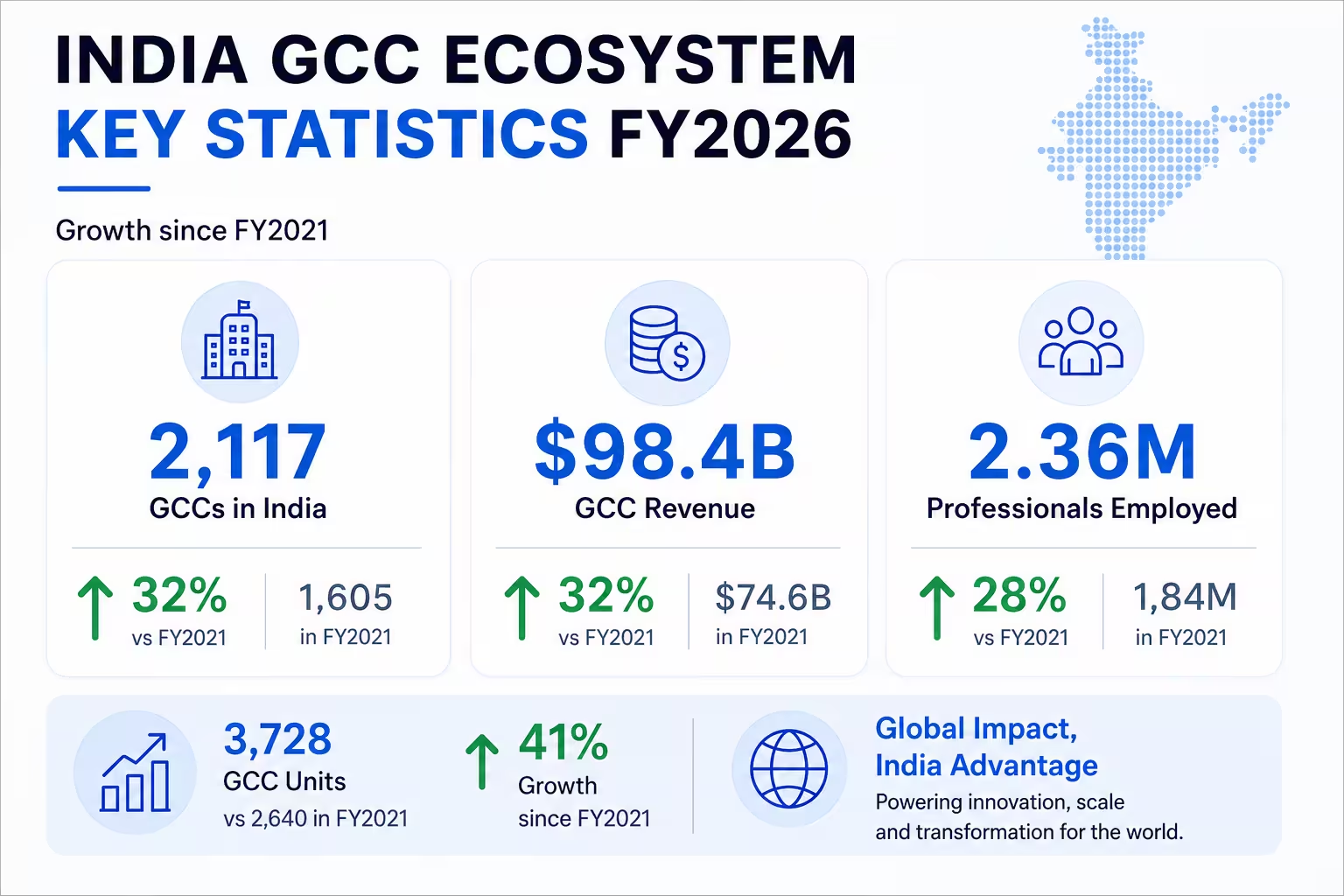
India’s Global Capability Center (GCC) ecosystem has reached a new scale and strategic importance. According to the Nasscom-Zinnov GCC Value Orbit report for FY2026, the country now hosts 2,117 GCCs operating across 3,728 units. These centres employ approximately 2.36 million professionals and generate an estimated $98.4 billion in revenue.
The number of centres has grown 32% since FY2021. Roughly 506 companies from the Forbes Global 2000 list now maintain GCCs in India. What began decades ago as cost-arbitrage and back-office operations has evolved into a core part of how many global enterprises design products, run platforms, and govern AI-driven capabilities.
This article examines the current market picture, the structural shifts underway, the role of AI, key challenges (especially talent), and practical considerations for organisations building or scaling GCCs.
Market Snapshot: Scale and Composition
Key figures from the FY2026 Nasscom-Zinnov landscape:
- Centres and units: 2,117 GCCs / 3,728 units
- Revenue: $98.4 billion
- Workforce: 2.36 million professionals
- Growth since FY2021: +32% in centre count; revenue rose from approximately $61–65 billion range in earlier years to nearly $100 billion
- Source markets: Americas account for roughly 63% of centres, EMEA ~28%, Asia-Pacific ~9%
- New entrants: Over 100 new GCCs added in FY2026 alone; more than 500 centres established in the past five years
Office demand remains strong. GCCs have accounted for a large share of Grade A leasing in recent years (often 35–46% in major periods), with Bengaluru and Hyderabad continuing to lead, followed by other metros and emerging traction in additional cities.
Mid-market and private-equity-backed companies are also expanding their presence, indicating the model is no longer limited to the largest multinationals.
The Structural Shift: Delivery Engine → Enterprise Nerve Centre
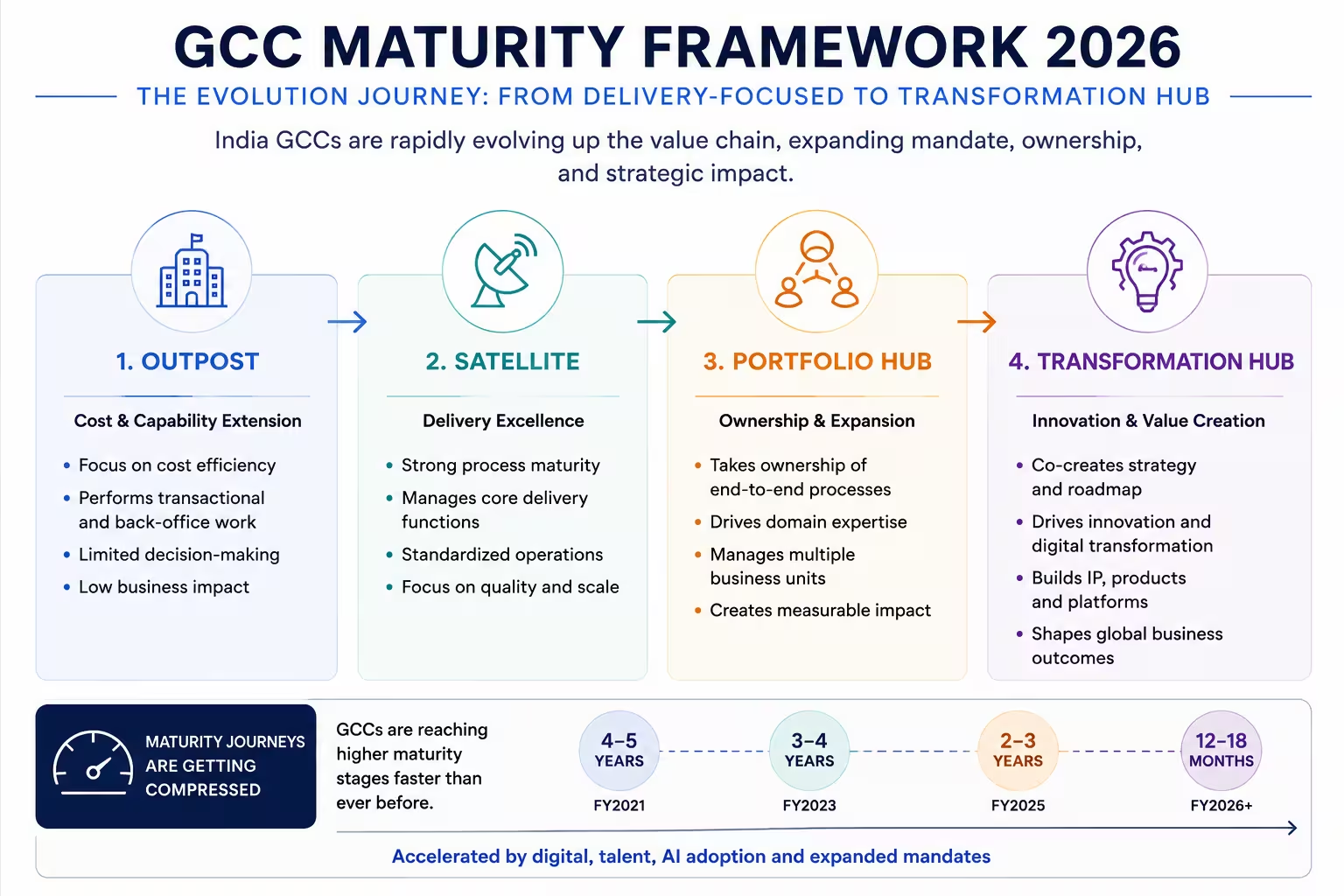
The defining change is not merely size. GCCs are moving up the value chain.
- Nearly 96% of GCCs established after FY2021 launched with product or portfolio mandates rather than pure execution work.
- Approximately 50% of centres now operate at a high maturity stage (portfolio or transformation hub level).
- Maturity timelines have compressed: what once took nearly a decade is increasingly designed into the operating model from day one.
- Leadership models are evolving—around 64% of India GCC heads now hold dual roles that combine global functional accountability with site leadership.
In practical terms, many GCCs now own or co-own product roadmaps, platform architecture, AI governance, cybersecurity standards, and outcome metrics rather than simply delivering tickets or processes defined elsewhere.
AI as the Primary Catalyst
Artificial intelligence is the clearest accelerator of this shift.
- Nearly half of all GCCs set up since FY2021 were designed with AI as a core focus from inception.
- More than 1,200 centres in India have embedded AI and machine learning capabilities.
- These are supported by over 250 dedicated AI Centres of Excellence and a specialised talent base of approximately 250,000 AI/ML professionals.
- India ranks as one of the largest (and often cited as the second-largest after the US) enterprise AI talent hubs within the global GCC landscape.
Demand for AI-related skills continues to rise. The work itself is shifting toward data platforms, applied AI, product engineering, MLOps, and governance of autonomous systems—functions that build and oversee automation rather than compete with it.
Benefits for Global Enterprises
When executed well, modern GCCs deliver:
- Direct ownership of intellectual property and institutional knowledge
- Faster innovation cycles through follow-the-sun engineering and product teams
- Access to a large, diverse STEM and digital talent pool at scale
- Greater control over quality, security, and strategic priorities compared with pure outsourcing models
- Ability to anchor high-value capabilities (AI, engineering R&D, cybersecurity, analytics) close to global decision-making while benefiting from India’s ecosystem depth
For sectors such as automotive, semiconductors, industrial technology, and software, India GCCs increasingly serve as extension of core R&D and product organisations.
Challenges and Constraints
Scale does not eliminate friction. Several issues are becoming more visible:
Talent scarcity and wage pressure
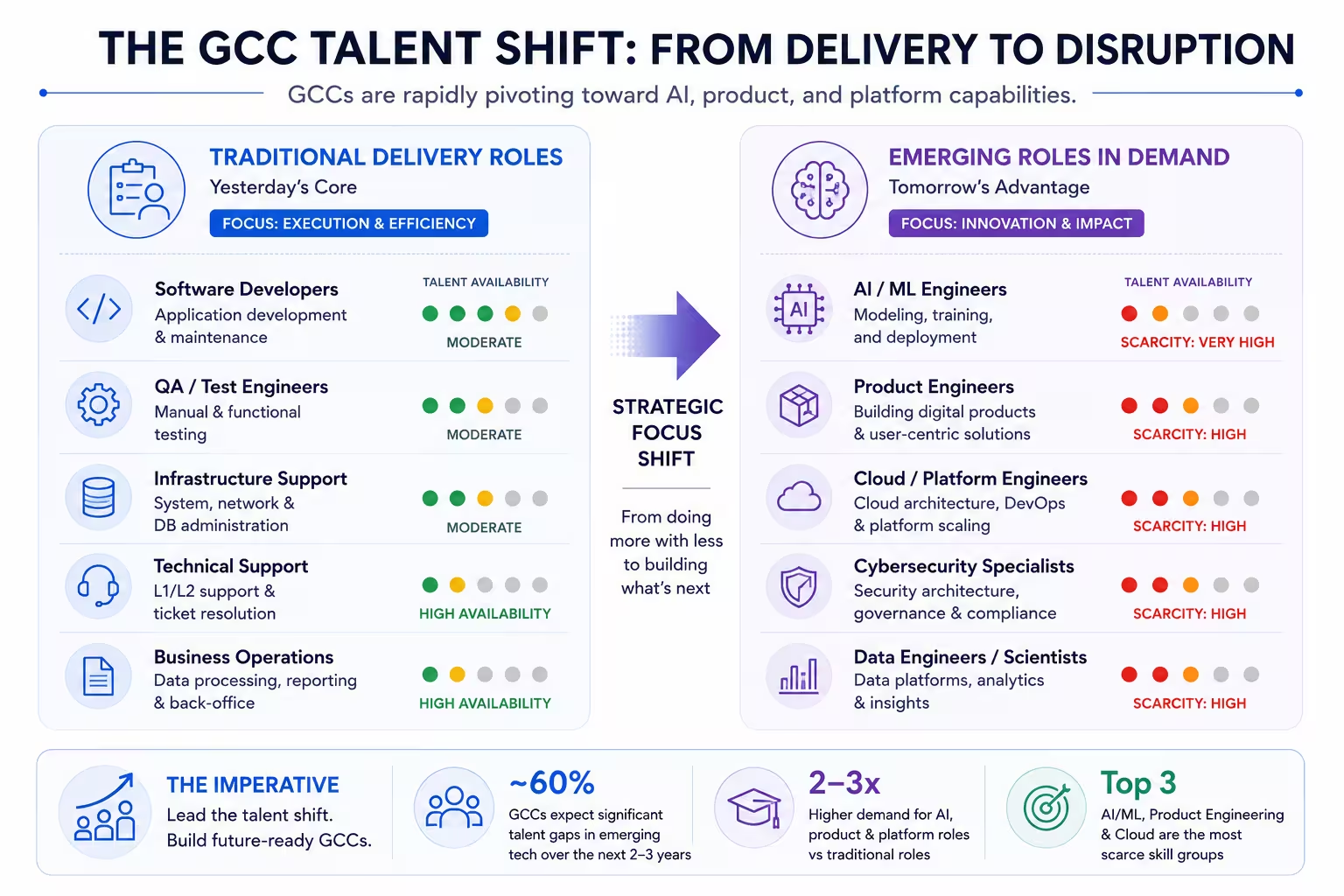
Specialised AI, data, cloud, cybersecurity, and domain-plus-digital profiles remain in short supply. Mid-to-senior (roughly 8–15 years) roles with both technical depth and domain experience are particularly competitive. Reports note rising compensation in certain tech roles and skills gaps estimated in the 38–42% range for specialised AI/data talent in some analyses. Time-to-fill for critical roles frequently exceeds 45 days.
Competition for the same talent pool
GCCs now compete not only with each other but with product companies, startups, and global tech firms for the same high-skill profiles.
Operating-model lag
Many centres still run with delivery-oriented structures, incentives, and governance even as their mandates have become more strategic. Closing this gap requires deliberate redesign of decision rights, performance metrics, and leadership expectations.
Infrastructure and location dynamics
Primary hubs face congestion and cost pressure. Secondary cities and flexible workspace strategies are gaining attention, but talent density and ecosystem maturity remain highest in established locations.
Governance, risk, and tax considerations
As GCCs take on higher-value and more autonomous work, issues of data governance, AI safety, cybersecurity, intellectual property protection, and evolving international tax rules become board-level topics.
What Organisations Should Focus On
- Clarify the mandate early — Product/portfolio ownership and AI capability require different operating models, talent profiles, and success metrics than pure cost or process centres.
- Design for maturity from the start — Build decision rights, global-local integration, and leadership dual roles into the blueprint rather than treating them as later upgrades.
- Treat talent as a core workstream — Map critical skills (especially AI/ML, platform engineering, domain specialists), invest in internal mobility and upskilling, and partner for specialised leadership and hard-to-find engineering roles.
- Align incentives and culture — Outcome-based measures, cross-functional collaboration, and clear career paths for global accountability reduce attrition and improve impact.
- Integrate location and real-estate strategy with talent strategy — Balance cost, talent availability, infrastructure quality, and long-term scalability.
- Strengthen governance early — AI ethics, data protection, cybersecurity, and IP frameworks should scale with the capability mandate.
Outlook
India’s GCC ecosystem is tracking ahead of earlier $100 billion-by-2030 projections and is already operating near that level in FY2026. Growth is expected to continue, driven by AI integration, expansion of mid-market and PE-backed centres, and deeper product ownership. The competitive advantage will increasingly belong to centres that combine scale with genuine capability ownership, strong talent systems, and mature operating models.
For global enterprises, the question is no longer simply whether to have an India GCC, but how to design and staff one that functions as a true extension of the enterprise rather than a remote delivery unit.
Frequently Asked Questions
How many Global Capability Centers are there in India in 2026?
According to the Nasscom-Zinnov report for FY2026, India hosts 2,117 GCCs operating across 3,728 units.
What is the market size of India’s GCC ecosystem?
Estimated revenue reached $98.4 billion in FY2026, employing approximately 2.36 million professionals.
How has AI changed GCCs in India?
Nearly half of GCCs established since FY2021 were built with AI as a core focus. More than 1,200 centres now embed AI/ML capabilities, supported by over 250 AI Centres of Excellence and roughly 250,000 specialised professionals.
What is the difference between a GCC and traditional outsourcing?
A GCC is an enterprise-owned entity (captive centre). Employees work for the company, intellectual property and institutional knowledge remain inside the organisation, and governance is direct. Outsourcing typically involves a third-party vendor executing defined work under a commercial contract.
What are the biggest challenges for GCCs in 2026?
Talent scarcity (especially specialised AI, mid-senior domain-plus-digital profiles), wage inflation in high-demand skills, competition for the same talent pool, and the need to redesign operating models and leadership structures to match higher-value mandates.
Which cities lead GCC activity in India?
Bengaluru remains the largest hub, followed by Hyderabad. Other metros and selected secondary cities continue to gain share, particularly for specific sectors such as BFSI and engineering.